
Welcome to NEWBotics Labs (NorthEast Wisconsin roBotics Labs)
We hope you enjoy your visit here. Please join or login if you have joined before.
News
 …
…
 …
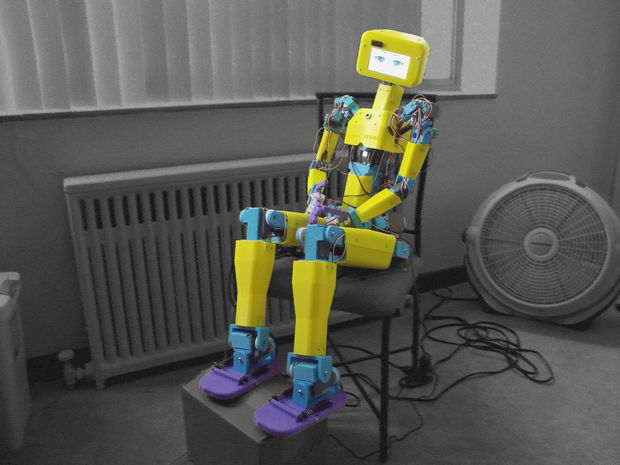
…I love you, robot!

- Posted 2nd April 2017, 12:00 PM
-
By Jason

I love you, robot! It doesn't get much cuter than this.
https://youtu.be/h1E-FlguwGw
- Read more 0 comments
Older news
News from: Robotics News
Bioinspired robot airdrops into remote waters via morphing wing-sail

“Fall like a maple seed, sail like a boat” sounds like advice from legendary heavyweight boxer Muhammad Ali. In reality, it describes a new robotic platform scientists have created for fast, long-term deployment to monitor remote waters.
Category: Robotics, Engineering
Tags: Transformable, Watercraft, Biomimicry, Flight
Wound-helix robot leaps and bounds over obstacles
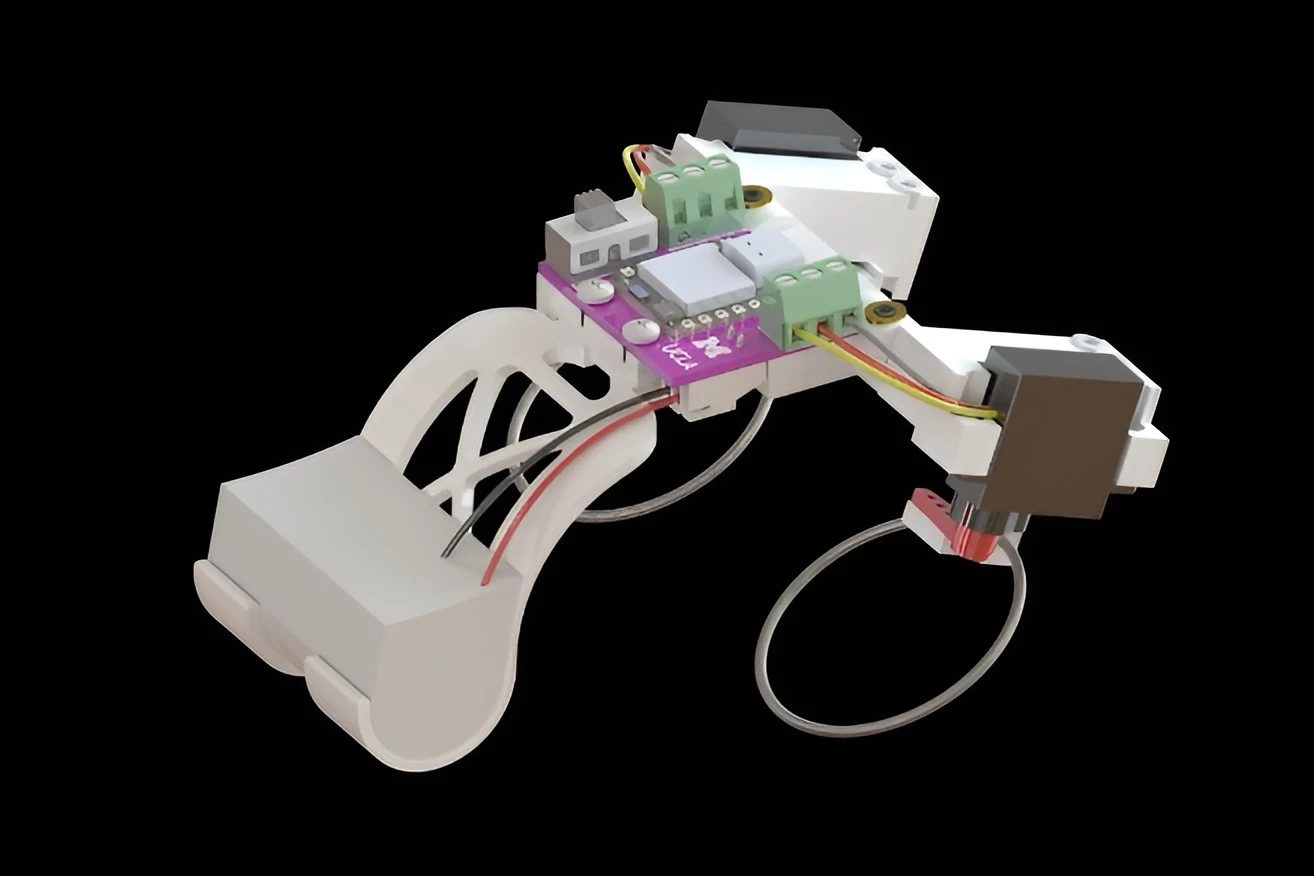
Remember that “dancing pencils” game schoolchildren played, where they passed two pencils through a small rubber band, twisted them repeatedly, and then let go to make the pencils jump around as the band unraveled? Turns out they were onto some serious futuristic robotics, as scientists are now applying a roughly related principle to facilitate movement in robots.
Category: Robotics, Engineering
Tags: UCLA, locomotion, University of Michigan
Robotic-Assisted Wheelchair Levels Field for Those With Disabilities
Startup company ATDev develops robotic-based assistive tech that enables physically challenged users to perform everyday tasks, even when no caregiver is present.
Many aspects of daily living, such as eating or picking up objects, are second nature to most of us. But even routine tasks can become challenging for mobility-challenged users, particularly those confined to wheelchairs. Home health care aides may not always be available, complicating matters.
A startup company called ATDev has developed a Robotic Assistive Mobility and Manipulation (RAMMP ) Platform that pairs a power wheelchair with a coordinated robotic arm, on an open software platform. Thanks to the robotic assistance, the chair takes on tasks of reaching and lifting and fetching that would otherwise wait for a caregiver. It enables those requiring assistance to perform many daily tasks on their own.
Learn more about MassRobotics residents here
The post Robotic-Assisted Wheelchair Levels Field for Those With Disabilities appeared first on MassRobotics.
The Evolving Quest to Build Life in a Lab
Scientists want to create cells from scratch, to unveil life’s origins or provide specialized functions. Are they close?
This article was originally published on Undark. Read the original article.
On a lonely planet, billions of years ago, a soup of chemicals—in the right place, at the right time, and with the right conditions—shifted from an unalive assemblage into something scientists would call life.
Billions of years and a lot of evolution later, researchers are now attempting to reproduce that shift in their labs. They are, put simply, trying to create life. If they mix Goldilocks ingredients together in a Goldilocks way, the ingredients will hopefully coalesce into cells, with all the parts cells have and the functions they perform. And they’re getting awfully close.
Scientists working toward this endpoint have different aims and generally fall into two main groups. The first wants to understand how life came to be in the first place by replicating the conditions of this long-ago lonely planet; the second want to design cells from scratch that can potentially perform specialized jobs for humans, from medical treatment to manufacturing without the billions of years of evolutionary baggage that can have unpredictable effects.
Both sides of the effort are growing, with a coordinated program funded by organizations like the National Science Foundation and research supported by NASA. There has also been more regulatory scrutiny—a sure sign of scientific progression, and the reality of the technology’s risks.
Kate Adamala, a synthetic biologist at the University of Minnesota, was in the former research group, focusing on the origin of life, but decamped to the latter after graduate school. “I want something that’s still very foundational, very discovery-driven, but it would be nice if there were actual real-life applications,” she said. She found it in synthetic biology.
Today, she uses the field’s modern tools to try to make life in the lab—and she recently made a breakthrough: In July, she announced that she had built a synthetic cell she dubbed SpudCell. It can feed, compete for food, grow, divide, and replicate its DNA—showing, in other words, a cell’s complete life cycle.
Still, it’s not quite “alive,” scientists tend to agree: It can’t whip up its own protein-makers, the full genome doesn’t carry through more than a few generations, and it can’t evolve on its own. The paper also has not yet been peer-reviewed or published in an academic journal.
If they mix Goldilocks ingredients together in a Goldilocks way, the ingredients will hopefully coalesce into cells, with all the parts cells have and the functions they perform. And they’re getting awfully close.
If the SpudCell were alive, it wouldn’t be life as it arose on ancient Earth, necessarily a basic and limited form. But research on it and related work could illuminate the basics of biological functioning, while also yielding ginned-up cells that humans could put to work by, say, creating chemicals that now come from petroleum. Adamala liked the combination of basic science and application. “That turned out to be jackpot,” she said in an interview with Undark in February.
She’s been working toward that, building what those in the field call “synthetic minimal cells,” cells constructed with known ingredients, to accomplish specific tasks (like metabolizing); they, according to Adamala’s university webpage, have “some, but not all functions of live natural cells.” The version she has recently worked on, SpudCells, are essentially tiny fat bubbles with DNA or RNA inside. That genetic material can instruct the fat bubble to make proteins, as it does in natural cells. Her creations can also merge, a capability that could allow them to interact with human cells later and send their protein products to the outside world. That would make them useful to the medical or manufacturing communities, since the molecules that become plastic or medicine don’t do any good if they remain locked inside a cell’s boundaries. SpudCell is an advanced version of these ideas, using 90,000 genetic base pairs and a premade mixture of enzymes, borrowed from actual life. The cell can copy DNA, feed using proteins it produces, and divide once it’s fed sufficiently.
As synthetic biology develops, the field’s quest to make life in the lab could help lead to targeted medical treatments, but that pursuit could also someday—without proper regulation and oversight—pose safety and containment concerns, if the technology were weaponized to deliver harmful material or if a leak allowed the cells to travel beyond their intended target. And while Adamala’s work replicates—as do the Frankenstein creations of other researchers—some aspects of life, its products can’t, say, replicate themselves, as a normal cell would.
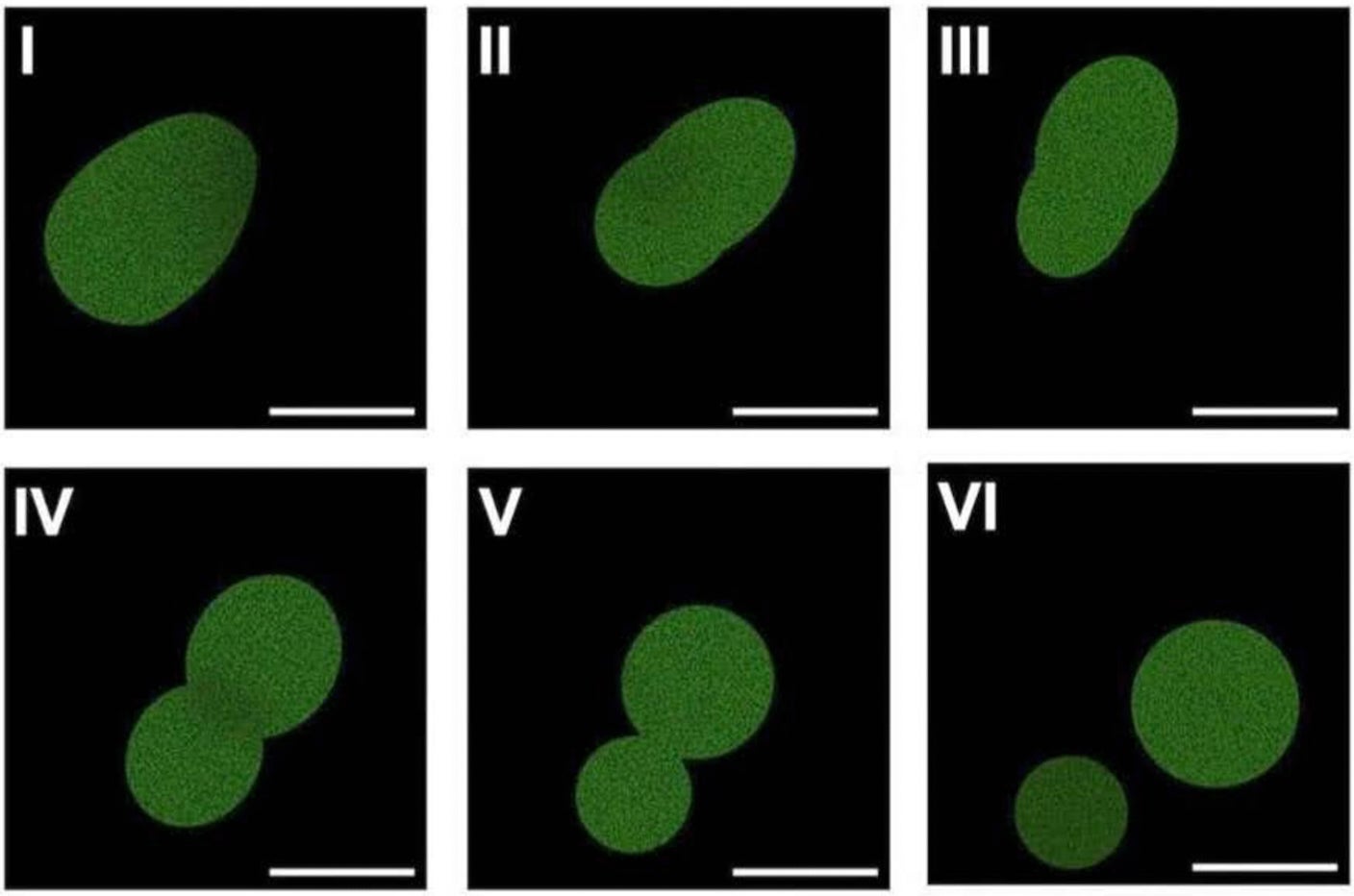
To say someone has created life in a lab, they would need to get a synthetic cell to do all the things life does, at once. But getting the parts to be more than their sum has proven difficult. “Up until now, the conversation has been, ‘Well, you put all these things in physical proximity at the same time, and then magic happens, right? Life happens,’” said Elizabeth Strychalski, head of the Cellular Engineering Group at the National Institute of Standards and Technology.
But life hasn’t happened—at least not yet.
Even if a scientist were to succeed, determining that’s the case might be complicated, because there is no official definition of what makes something alive. Adamala wants to make life in a lab. But what, actually, does that mean? “I can’t tell you, because I don’t have a definition of life,” she said.
Adamala, for one, is sanguine about that uncertainty. “We quietly ignore that problem and just move on with ‘I want to make something that looks like a cell,’” she said in the February interview conducted before she had released the SpudCell paper. “And I will know it when I see it.”
The dictionary version of life might be squishy, but many scientists do generally agree on a few of its characteristics: It has to reproduce, turn fuel into energy through metabolism, respond to that environment, maintain its own internal environment, and evolve.
How some chemicals in Earth’s younger years came to accomplish all those things remains one of science’s biggest mysteries. Life, in many ways, comes down to chemistry; studying the interaction between certain molecules can reveal how they may have come together and undergone chemical reactions that eventually became biological.
But finding the answer is one goal of the Origins of Life Initiative at Harvard University, a collaborative research group that began around 20 years ago. “I met and started talking to people who were working on the deep history of Earth,” said Dimitar Sasselov, an astronomer and the organization’s founding director. “What was the Earth like when life came about?” And what, he wondered, did the early evolution of that life look like?
Sasselov decided that understanding that tipping point—how life, once it emerged, transformed and took over the planet—deserved more study. But it required a big tent, with people from many disciplines: thus, the Origins of Life Initiative. The researchers all had to become mini-experts in each other’s fields. For his part, Sasselov jokes that he got his initial knowledge of chemistry from reading the “Complete Idiot’s Guide” to the topic.
As the Origins of Life Initiative was spinning up, Sasselov helped spearhead the Kepler Space Telescope launch in 2009. The project’s goal was to discover planets a bit like Earth, orbiting their stars in ways that might make them habitable. The telescope went on to discover thousands of planets of all sorts. At the same time, attempts to create life, or its pieces and parts, in labs across the world accelerated. Sasselov thought that was an interesting way (perhaps the only way) to find out how life might have arisen here or on those other worlds that Kepler saw.
Sasselov, for instance, looks at how RNA—which, among other tasks, acts as a messenger to deliver DNA’s genetic instructions—interacts with small amino acids and peptides. He’s not himself trying to build a full cell, but rather trying to understand how initial cells’ building blocks may have stacked together.
Much of Sasselov’s work focuses on shining (literal) light at such foundational molecules and seeing which can preferentially survive and even harness the ultraviolet bombardment, which the sun would have blasted at early Earth. Knowing more about that could reveal key ingredients in life’s assembly.
In fact, many experts suspect that life may have started after RNA formed, spurred on nearby chemical reactions, and spontaneously started to replicate; only later would the more complicated genetic material, DNA, have formed from its simpler upstart. Earlier this year, researchers at the MRC Laboratory of Molecular Biology and the Inria Lyon Centre published a Science paper outlining their discovery of a short strand of RNA that came close to replicating itself.
Many experts suspect that life may have started after RNA formed, spurred on nearby chemical reactions, and spontaneously started to replicate.
Other researchers recently combined water and silica, and shot electricity at the mixture to simulate lightning. Almost like magic, their concoction formed a solid organic film, made of polymers—large molecules made of similar units bonded together—of hydrogen cyanide. The film contained little spherical structures the research team deemed “protocells.” The structures and the ingredients could plausibly have existed together eons ago, and with further chemical evolution—way back when, and perhaps soon in the lab—could organize into something more complex.
Work at the Origins of Life Institute and other beginning-of-life-focused research groups complements work done by scientists like Nobel Prize-winner Jack Szostak, at the University of Chicago, one of the leaders in investigating the idea that RNA may have preceded, and become key to, the first cells.
Szostak has worked on creating cells whose boundaries are fatty acids, with RNA inside—similar in idea to Adamala’s minimal cells. (Adamala did her graduate work in Szostak’s lab.) “Experimentally, we’re trying to just build a system that we think, in some ways, mimics what the first simplest cells, otherwise known as protocells, would have looked like,” said Szostak.
In the right conditions, Szostak’s creations can divide and split the RNA so that each of the pair gets some. The lab has also made cell-like structures whose RNA can create a copy of itself internally. Recently, his team has investigated whether RNA segments arranged into a circle might point the way toward actual genetic replication. They came up with this idea, he says, during the early months of the Covid-19 pandemic, when they couldn’t go into the lab but could talk to each other.
All of these parts need to come together, from the soup to the cell, for the astrobiologists to declare they’ve made life in the lab. That could happen in a year, Sasselov said—or a decade. “It is not that we need a bigger lab. It is not that we need a bigger computer. It is not that we need a specific reaction to work or not to work,” he said. “It is really more of a puzzle which has to suddenly come together.”
Adamala, meanwhile, is trying to put the puzzle together in a different way—one with more tools available. “When you’re trying to do it the proper way, from the astrobiology point of view, you’re basically not allowed to use anything that works well,” she said.
By that she means that scientists like Szostak limit themselves to the conditions of an old Earth; Adamala, on the other hand, can work to create a living cell using, essentially, any means necessary; she can print or clone strands of DNA, or design a protein with AI, for example. In creating the SpudCell, for instance, Adamala began with a mixture of the molecules a cell would need, already formed. She also took some chemical ingredients from a virus, and E. coli, and added the lipids that would form the cell’s membrane. She gave the cells specialized food that allowed them to grow, and used a protein that made the cell bend inward when its surface became crowded from feeding. That bend became a split, producing a new cell that could also eat and grow. When the research team created a mutant SpudCell that was a more efficient feeder, and mixed it with the original-flavored cell, it gobbled up more of the food than the predecessor and came to dominate the population, a compelled proto-evolution.
Adamala’s recent work embraces tools that allow her to construct cells from the ground up because her research’s scientific motivation is not to understand how the first life came to be, but how life fundamentally works and can be made to work for humans today. For instance, she imagines using synthetic organisms to produce petrochemicals that currently only come from oil, or to enable new cancer therapies. She and a collaborator have started a new nonprofit organization called Biotic, which intends to make the SpudCell an open-source system that others can license to do their own work.
SpudCell’s ingredients are all known. That’s true of any synthetic minimal cell, and such creations could tell us, Adamala said, which ingredients are strictly necessary for something to be alive—many of natural cells’ components may actually be extraneous to the basic “life or not” question.
Despite the differences in the two groups’ approaches, Sasselov sees a unity in their motivations. “We both want to understand at a fundamental level what life is,” he said. And to do so by building life. “But how we get there is different, and this is why we have so many astronomers and planetary scientists, geologists involved in this in our group,” he continued. “The other groups are mostly composed of biochemists, chemists, biologists.”
But the two camps meet and talk regularly, and discuss their progress. Sasselov thinks that once either group gets close to the ultimate goal, their similarities will increase. “We will essentially merge, because some of the techniques that they have discovered and developed will be useful to us, and many of the things that we have discovered will be useful to them,” he said. “And then we’ll build something which is the same, but with both of our efforts. So despite the fact that right now, we seem to be going on different trajectories, eventually it will be a big overlap.”
“We both want to understand at a fundamental level what life is.”
Scientists on Adamala’s side of the fence have succeeded in replicating some of life’s basic functions. Some synthetic biological creations can send and respond to signals in the environment. Some can communicate with each other. Others can make fats or protein building blocks; metabolize; replicate genetic material; and even introduce mutations that count as evolution. SpudCell can eat, grow, replicate, and do that rudimentary-but-not-quite-there version of evolution. But it can’t do all the things a normal biological cell can, like actually evolve, or make its own protein factories.
“The biggest thing that’s left to do, and it sounds simple, but it really is not, is to put all of it together,” said Adamala in the February interview. SpudCell is an attempt at that.
One key figure in this endeavor was J. Craig Venter, who led the effort to sequence the whole genome of an organism, back in the 1990s. Venter, who founded the J. Craig Venter Institute, passed away at the end of April at age 79. His goal in that early effort wasn’t just the sequencing: It was finding out what the genes did. In the 2000s, he and collaborators made synthetic genomes for a virus and a bacterium. For the latter, they used what they had discovered about genes’ functions. In 2010, they followed that up by putting a synthetic genome—designed in a computer and assembled from real DNA fragments—into a normal, living cell.
Six years later, his institute published the results on their synthesis of the first minimal synthetic bacterial cell, also by implanting synthetic material into a preexisting cell. But it replicated strangely, growing as a “giant blob,” in Venter’s words, with varying shapes, rather than staying small and similar as expected. By 2021, the group added 19 new genes, seven of which are linked to division; the cell split like normal.
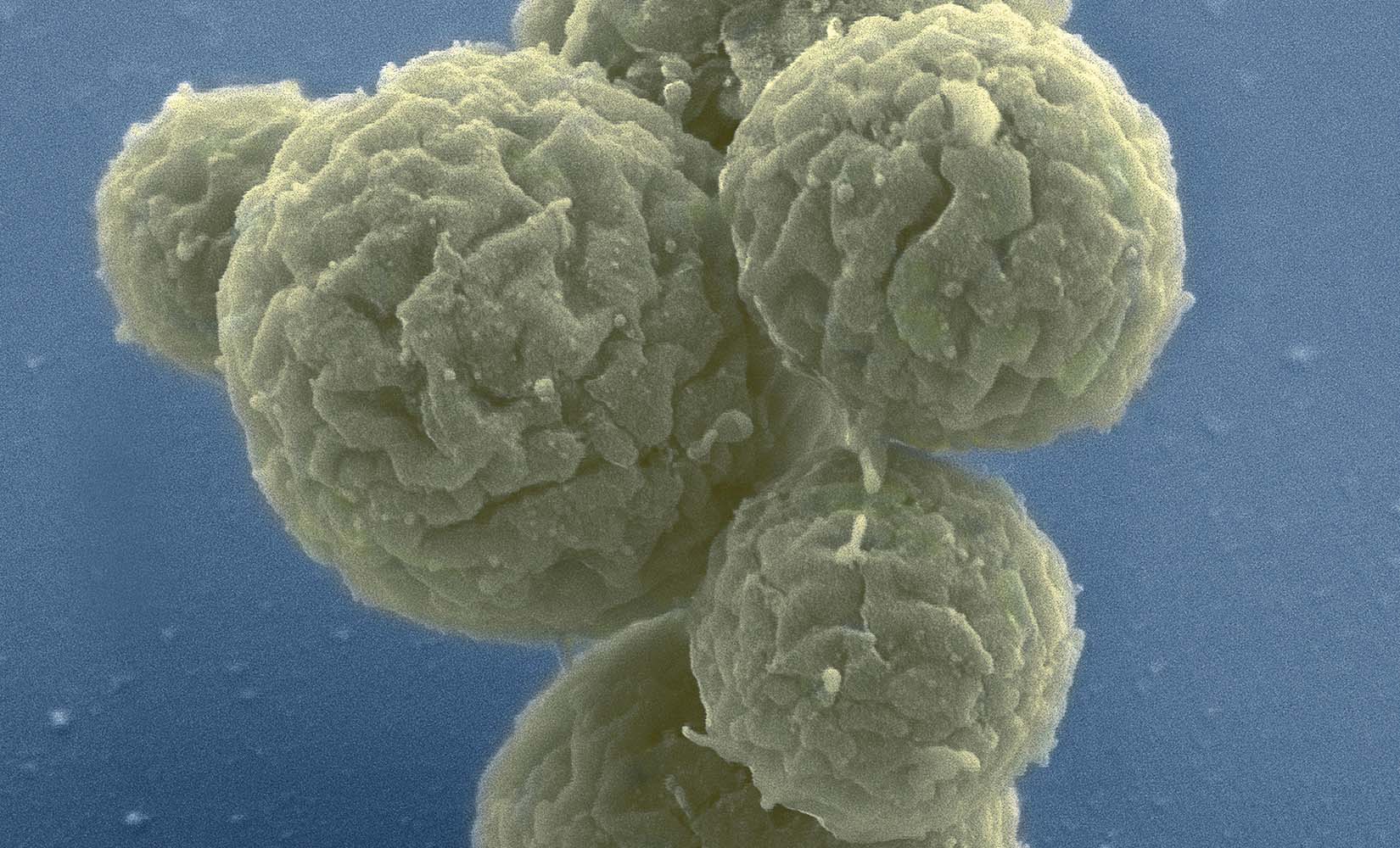
Shortly before his death, Venter said he didn’t know exactly what would come next. “I have my hope list, what we’d like it to be,” he said in March. For one, making a synthetic cell without having to wipe a living one and stick new DNA in it; creating it more from the ground up.
Once truly synthetic life exists, Venter said it could enable the kinds of things that brought Adamala to this side of the research, by giving a cell specific genetic instructions—making, say, drugs, chemicals, construction materials, and even food.
Together, fundamental researchers focused on the origin of life and synthetic biologists could show how life came to be, how its pieces and parts work together, and how making new life could change the world’s workings today as it did billions of years ago.
Not everybody fits neatly into those two boxes, though. Take Juan Pérez-Mercader, a senior research fellow at Harvard University. He’s approaching this central question of biology and experimental chemistry as a trained physicist. Before he tried to make some semblance of life in a lab, he worked on things like unifying the fundamental forces of the universe.
But Pérez-Mercader eventually tired of those particular equations and turned, instead, to the fundamental properties of living systems—handling information, self-reproducing, evolving, and metabolizing. Could they also be represented with equations? With the idea, he founded and directed Madrid’s Centro de Astrobiología, and then later took his work to Harvard.
He began by making equations to model the general properties of life that scientists agree on, and turned those into computer solutions. Out popped swimming, digital single-celled beings. “If I do this in a computer, I can do this with chemistry,” he said.
His chemistry started with a compartment—a kind of container for the cell’s parts, like Adamala and Szostak’s lipid bubbles. But Pérez-Mercader wanted to do things a little differently: He wanted to show that you could use his equations to make something that qualified as “alive” without being beholden to particular molecules that make up life as we know it—to show, in other words, that the properties we use to define life aren’t actually ingredient-specific. “In my lab, upstairs from this office, there is a sign that says, ‘No biochemistry, no biochemicals allowed,’” Pérez-Mercader said.
A breakthrough came when his team found out about a technique called polymerization-induced self-assembly, used in other fields. In short, they could put carbon-based molecules that are hydrophilic—meaning they like water—into H2O with carbon-based monomers and photo initiator molecules that convert energy from light into chemical energy; hydrophilic molecules, by virtue of how their electrons are arranged (unevenly), are attracted to water molecules, whose electrons are arranged similarly.
“In my lab, upstairs from this office, there is a sign that says, ‘No biochemistry, no biochemicals allowed.’”
Exposed to light, these molecules link to each other to form polymers. When they do, they gain a hydrophobic, or water-resistant, part that has evenly distributed electrons. Their water-loving ends then naturally turn to face the water, while the water-fearing ends fold themselves inward, away from the water. They thus form themselves into little spheres, called micelles. These micelles are filled with fluid and separated from the environment.
The molecules continue to link to each other, making the micelles thicker. The pressure inside grows, and eventually a portion of the structure breaks off, to form a new micelle, which then itself does the same—reproduction. The new micelles are not clones of each other, but slight variants—a primitive kind of evolution. And because they’re using light to sustain themselves, they perform a sort of metabolism.
The system, then, exhibits versions of the characteristics of life, integrated into one system, without ingredients like RNA, DNA, lipids, sugars, or proteins.
Pérez-Mercader’s micelles are not made with typical biochemistry, like DNA or RNA, so not everyone agrees they would qualify as alive. The journal Cell reportedly rejected the paper about SpudCell after one peer reviewer said it was not real biology. Adamala told Undark she doesn’t usually comment on the review process. Many, if not most papers, she wrote via email, go through more than one submission. “For people outside of science it sounds like a big deal, for us it’s Tuesday,” she wrote.
Synthetic micelles in Juan Pérez-Mercader’s lab form autonomously and grow in the presence of light and food, making the micelles thicker until they mature into vesicles. The vesicles eventually release what Pérez-Mercader calls “spores” that grow into new micelles and then into new vesicles, thus performing a reproductive cycle.
People who come from the origins of life side of the equation are sometimes criticized for assuming all life will be like familiar life on Earth, said Robert Dorit, a biologist at Smith College. But they’re also criticized if they consider less Earth-chemistry-specific options. “I think you can defend an argument that says our definition of life should also not be unnecessarily tethered to what we know here,” Dorit said. But, to him, “alive or not” is not ultimately the most interesting question. Any life made in a lab won’t be familiar life, which formed itself thanks to eons of evolutionary pressure. And trying to create weird life, not quite like a typical cell, can reveal things about life that formed naturally.
Pérez-Mercader, for one, says that his work is proving two things at once: that you can turn nonlife to life in the lab, and that what we think of as life doesn’t depend on a particular chemistry. And so, his thinking goes, it could have arisen on planets very different from ours.
Pérez-Mercader’s research, though, swings back around to a central point, as does Adamala’s: If scientists don’t have consensus on what life is, how will they know when they’ve created it?
The answer falls partly to Strychalski, of the Cellular Engineering Group at the National Institute of Standards and Technology. NIST’s governmental duty is to measure things. Sometimes that’s how long a meter is. Sometimes it’s how alive a fake cell is. It’s different from measuring the materials in nanotechnology, or devising metrics for cybersecurity. Instead, in this field, “we’re building with the stuff that we are also made of,” she said.
“It’s not going to get up and walk out of your petri dish.”
Strychalski also does research in this scientific field, having worked with Venter’s institute on a recent project, for instance. And she recently attended a workshop that Adamala organizes, under a research network called Build-a-Cell, which since 2017 has been gathering researchers twice a year who are trying to make life in the lab. “That’s my favorite thing about this community, is that it actually is a community,” Adamala said.
One thing was clear at that Build-a-Cell workshop: “Some folks are getting really close to assembling living cells from nonliving material,” Strychalski said. But that pesky part about getting all the nonliving materials to work together on their own still dogs them.
Strychalski is still investigating what measurements are needed to troubleshoot cell-building and what measurements are needed to decide that ultimate question: Does it live? “It’s not going to get up and walk out of your petri dish,” said Strychalski.
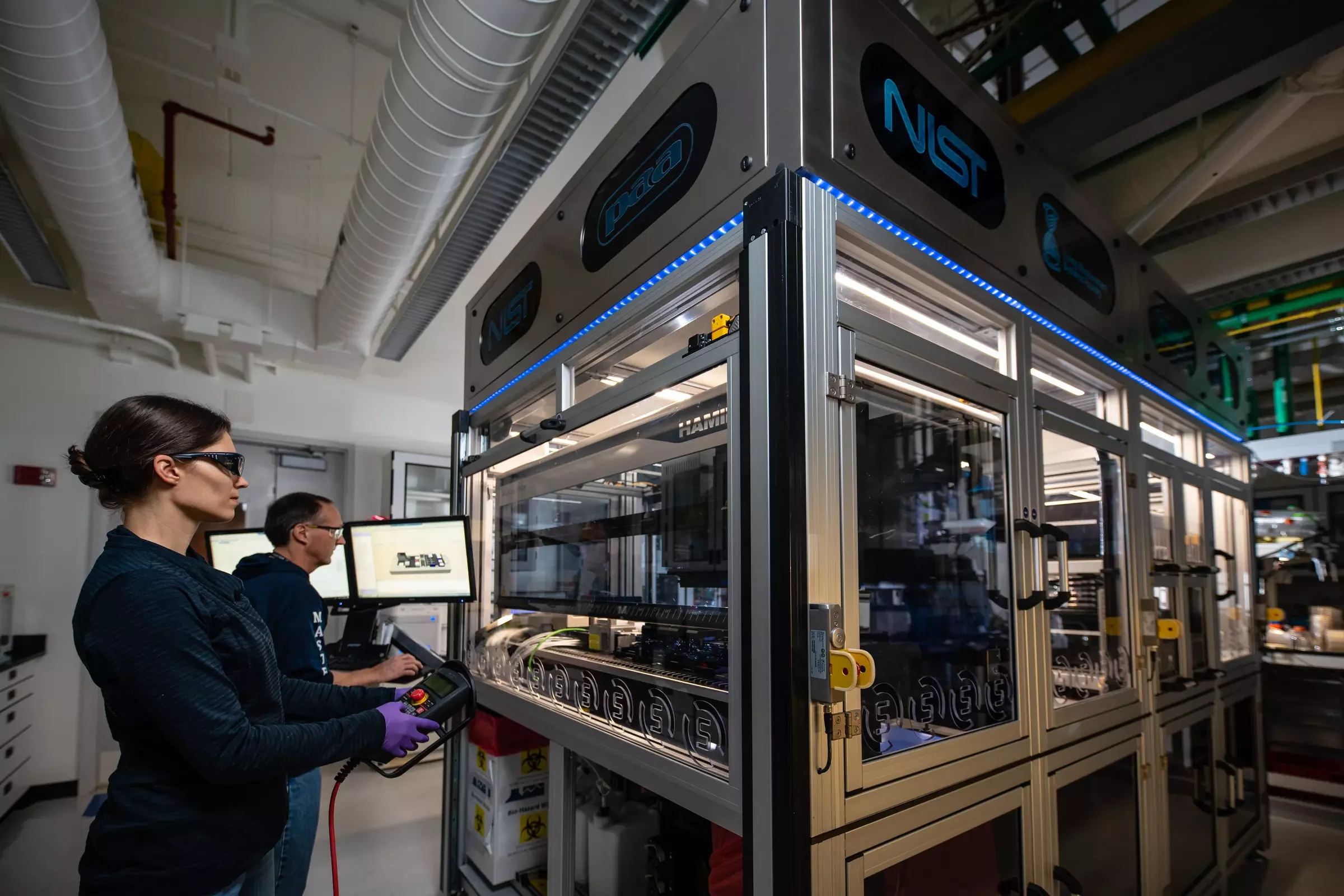
The answer to the question is important to determine not only who will be the first to create true life in the lab, and what is needed to do so, but also for safety. As SpudCell develops, Adamala plans to actively pursue biosafety measures, she wrote in a follow-up email. “Once it becomes more robust and able to grow and divide faster and more efficiently, we’ll need safeguards,” she wrote, which are designed to stop the cell from replicating outside of a controlled environment.
“If someone does make something that’s alive, or alive in a new way, in the laboratory, I want to make sure that they realize that’s happened,” Strychalski said, “so they can bleach the bench.”
Strychalski isn’t alone in being mindful of synthetic biology’s risks: Adamala, Szostak, Venter, and dozens of others penned a 2024 Science paper, about the potential for creating something called “mirror life.” On Earth, all known biological molecules of a given type face a single direction: All genetic material is “right-handed,” for instance. The amino acids making up proteins face the other way and are “left-handed.” But some scientists have begun work on left-handed DNA, or right-handed proteins. Maybe someday—at least a decade from now, the authors estimate—there could be whole mirror cells.
Life and lifelike elements like this, though, could pose huge dangers, according to the authors. They might be pathogens against which we have no defenses, or they could act like invasive species. The field is working to get ahead of those possibilities. “We’re seeing basically a global push for the moratorium,” said Adamala, discussing a kind of synthetic cell deemed particularly dangerous. While there aren’t yet amendments to international conventions, the wheels of bureaucracy are turning. The UNESCO International Bioethics Committee, for instance, recommended a moratorium on creating mirror life, and a group convened by the UK Government Office for Science recommended potential regulation against the development of mirror genomes that can self-replicate. The UN Secretary-General’s Scientific Advisory Board suggested defining “red lines” in mirror-life research policy.
Strychalski points to this as an example of where getting ahead isn’t just good—it may be necessary. “There might not be a second chance,” she said. And she thinks more monitoring could be good for synthetic biology research in general. “Right now, there’s like no requirement for monitoring your laboratory or office space for accidental release of engineered biological anything,” she said.
“If someone does make something that’s alive, or alive in a new way, in the laboratory, I want to make sure that they realize that’s happened,” she said, “so they can bleach the bench.”
She grew up in science thinking about such potential bad outcomes, since she, like Pérez-Mercader, came from physics. Physicists tend to keep their field’s Manhattan Project roots and potential for dual-use technology—technology that is useful for both benign civilian and potentially malign military purposes—in mind, she said, remembering how quantum mechanics was weaponized into an atomic bomb by the very people who were in the process of discovering it.
Just because you can do something doesn’t mean you should, Strychalski notes. “I’m telling my toddler this constantly,” she said, “but I think it holds in the laboratory as well.”

The post The Evolving Quest to Build Life in a Lab appeared first on SingularityHub.
Aslan Motion Technologies Launches aslanmotion.com with NDAA Focuse…
New online store opens today with a GPS module, a 4-in-1 ESC, a flight controller, an IR and overt LED module, and a BLDC motor, manufactured in Virginia for commercial and defense buyers across air, sea, and land platforms
Born to Be Open: RoboParty Launches RP1, a Full-Stack Open-Source H…
With open access to both hardware and software, RP1 enables researchers to customize the system, integrate their own algorithms, and test new approaches on real hardware.
Robot Talk Episode 166 – Evolving robot bodies and brains, with Rik…
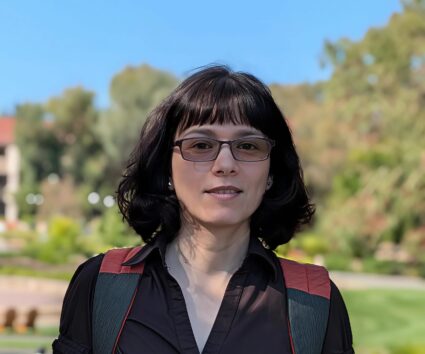
Claire chatted to Rika Antonova from the University of Cambridge about using artificial intelligence to develop complimentary robot hardware and algorithms.
Rika Antonova is an Associate Professor at the University of Cambridge. Her research interests include co-design, automated algorithm discovery, data-efficient reinforcement learning, exploration, active learning, and robotics. After completing a research Master’s degree at the Robotics Institute at Carnegie Mellon University and a PhD at KTH Royal Institute of Technology, Rika undertook a Computing Innovation Fellowship at Stanford University. Before that, she was a senior software engineer at Google.
Mouser New Product Insider: Over 5,000 New Parts Added in Third Qua…
Over 1,200 semiconductor, electronic component and industrial automation manufacturers rely on Mouser to introduce their newest products to the global marketplace. Mouser's customers can expect 100% certified, genuine products that are fully traceable to their manufacturers.
MassRobotics Opens Applications for Healthcare Robotics Catalyst Pr…
The Healthcare Robotics Catalyst Program pairs early- to growth-stage startups with industry mentors
The Oldest Living Land Animal Is 194. DNA May Now Reveal the Secret…
Jonathan the giant tortoise was born when Darwin was still a young man. Youthful gene activity may account for his exceptionally long life.
Getting a DNA sample is simple. Rub a Q-tip a few times inside your cheek, and voilà.
Not so with a 400-pound Aldabra giant tortoise. At the age of roughly 194, Jonathan is the oldest known living land animal on Earth. He’s spent most of his life lounging on the manicured lawns of the governor’s residence on the island of St. Helena, where he arrived as an adult. Though blinded by cataracts, Jonathan still chows down on grub and has excellent hearing.
Even among long-lived tortoises, Jonathan is exceptional. He’s lived around a century longer than others of his kind. Now, thanks to his DNA, an intrepid team of scientists may know why.
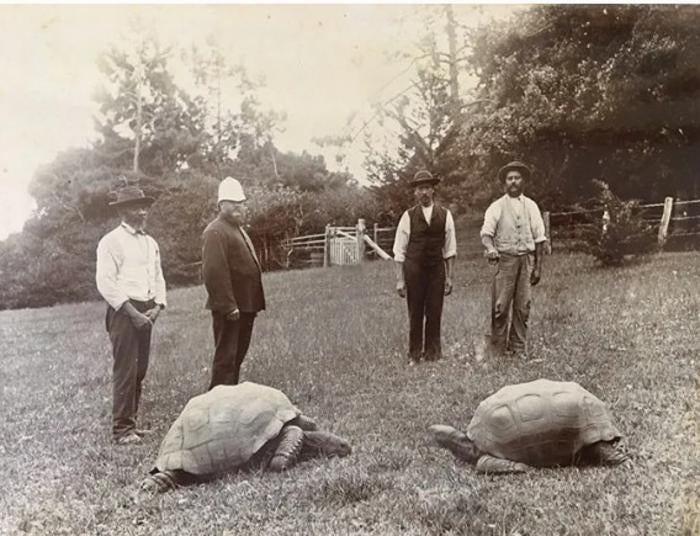
Getting a sample was tricky and dangerous. Jonathan’s veterinarian, Joe Hollins, lured him in with fresh greens, then quickly wedged his mouth open to scrape cells from inside his cheek. The tortoise tolerated the unusual procedure for only a few seconds. Any longer, and Hollins might have faced the wrath of Jonathan’s razor-sharp beak.
But the maneuver paid off. After sequencing the sample, the team found that Jonathan’s genome was better maintained compared to tortoises roughly a century younger.
As animals age, their DNA accumulates mutations. Telomeres, the protective end caps of chromosomes, shrink. Chemical tags that control which genes are turned on or off also go awry, straying from their normal patterns and settling on unexpected spots across the genome.
For study author Stephen Clark, founder of the nonprofit Kallel Foundation, this growing disorganization, called entropy, is central to aging. Yet Jonathan has weathered plenty of biological wear and tear despite his advanced age.
“Nature has already solved the puzzle of aging in remarkable ways, and Jonathan’s genome provides a blueprint for cellular resilience,” said Clark in a press release.
Aging Outliers
Animal research has given us clues to how we might live healthier, longer lives.
At one end of the spectrum are short-lived creatures. Studies of lowly roundworms and fruit flies—often squished or swatted—have uncovered genes and molecular pathways that let cells sense nutrients, withstand stress, and clear cellular waste. These processes falter with age.
At the other extreme are animals that seemingly don’t age. Take the hydra, a tiny, carnivorous jellyfish-like animal. In long-term studies, some species showed no detectable rise in mortality or lower reproduction with age and retained the ability to regenerate after severe injuries. Their “immortality” may come from a steady supply of stem cells and resilience against senescent cells that no longer work properly.
Naked mole rats have also caught scientists’ attention. These nearly hairless rodents can live more than 30 years, roughly 10 times longer than a mouse of similar size. They resist many types of cancer, maintain strong hearts and muscle mass into old age, and rarely develop Alzheimer’s disease, even with toxic protein buildup. By studying these animals’ genetics, scientists have discovered ways they preserve gene expression machinery and maintain protein stability as the clock ticks on.
Tortoises offered more inspiration. In 2019, scientists sequenced the genome of Lonesome George, the last known Pinta Island giant tortoise, who died at an estimated 100 years old. His genome revealed beneficial adaptations in DNA repair, immune function, and inflammation. A subsequent study comparing multiple turtle lineages found shared genetic changes associated with cellular resiliency against stress and cancer protection.
“Each of these long-lived species has some kind of special trick,” biologist Steve Austad at the University of Alabama at Birmingham told The New York Times. “And some of those may turn out to be relevant to human aging.”
But as the oldest land creature, Jonathan is irreplaceable. Hidden in his DNA may be another set of tricks for keeping cells, and maybe the entire body, functioning for longer.
Spirited Supercentenarian
Collecting Jonathan’s DNA without getting bitten or kicked was only the first hurdle. Shipping the precious cargo across the ocean without damaging it was another. Then came the headache of piecing his genome together.
Cheek cells yield shorter DNA fragments that must be stitched together, and samples can be contaminated with bacteria. The first try at reconstructing Jonathan’s genomic blueprint had gaps, so the team, led by the Nashville-based nonprofit Kallel Foundation, used DNA from a younger tortoise to fill them in. Roughly 95 percent of the resulting Frankenstein genome was Jonathan’s.
A blood draw, the gold standard for DNA sequencing, might have yielded a clearer map. But St. Helena officials ruled it out because of the risk of infection.
Even so, Jonathan’s genes revealed intriguing differences compared to four other Aldabra tortoises roughly a century his junior. Of the 287 genes unique to Jonathan, many were involved in DNA repair or preventing telomeres from shortening—both of which help keep the genome stable. Roughly a dozen of Jonathans’ genes overlapped with genes implicated in naked mole rat longevity and that of other long-lived animals, hinting at shared evolutionary strategies.
But the surprise finding related to his epigenetics, the system of chemical tags, or DNA methylation, that regulates gene activity. Young animals tend to maintain relatively consistent methylation patterns between cells, coordinating which genes switch on or off. With age, some of these marks disappear while others attach chaotically, making gene activity less predictable.
Clark calls this growing disorganization entropy. As expected, Jonathan’s epigenome showed higher overall entropy than his younger peers. But some genes were spared.
Those involved in mitochondrial function kept a surprisingly youthful profile, comparable to that of a five-year-old Aldabra. Mitochondria, the cell’s energy producers, are closely linked to aging and age-related diseases. Maintaining mitochondrial health may have helped fuel DNA repair systems and warded off disarray in the epigenome—potentially creating a virtuous cycle to keep disorganization in check.
The findings echo genetic research on a woman who lived past 117. Although she harbored clusters of mutated blood cells and signs of DNA damage, her mitochondria appeared healthier than those of women decades younger.
How genes behave is just one piece of the aging picture. Diet, exercise, environment, and mental health all play roles. Jonathan mostly lived a life of luxury, with abundant fresh food, a safe home, and his veterinarian, Hollis, close at hand.
These comforts may have contributed to his longevity. But the results point to potential biological pathways that the body uses to stay spry for longer. The team plans to map the genomes of more Aldabra tortoises and other long-lived creatures. By studying these outliers, we may better grasp our own longevity and learn how to fight off age-related diseases.
“Our goal is to take these evolutionary insights and immediately translate them into practical, affordable treatments for everyday people,” said Clark.
The post The Oldest Living Land Animal Is 194. DNA May Now Reveal the Secret to His Longevity. appeared first on SingularityHub.
MassRobotics Opens Applications for Healthcare Robotics Catalyst Pr…
The Healthcare Robotics Catalyst Program pairs early- to growth-stage startups with industry mentors

MassRobotics announces the call for applicants for Cohort 6 of its Healthcare Robotics Startup Catalyst Program, a four-month, non-equity initiative that helps robotics and automation teams accelerate clinical readiness, technical validation, and go-to-market in healthcare and life sciences. Applications open today and close on December 31, 2026. The cohort will run February through June 2027, concluding with company showcases at the Robotics Summit and Expo in Boston.
This year, MassRobotics welcomes Intel to the Catalyst Program’s steering committee, joining founding partners Festo, Novanta, and Mitsubishi Electric US. Intel’s Health and Life Sciences team brings mentorship and technical depth in edge AI and on-device compute for surgical and procedure-enabling robotics and OR automation, an area of growing interest across the cohort.
The Catalyst Program connects selected startups with senior mentors from Festo, Novanta, Mitsubishi Electric US, Intel, and yaxxoo, along with practicing clinicians and leading organizations in the medical field. Companies work toward practical milestones such as proof-of-concept builds, pilot design, regulatory planning, or systems integration, supported by organizational/technical support and biweekly mentor cadence.
Since 2021, the Catalyst Program has mentored 35 startups spanning pre-seed through Series A, with teams headquartered from Boston, Toronto, and Paris to Barcelona, Sydney, and beyond. Alumni have gone on to complete a public listing, advance multiple proof-of-concept deployments, and collectively disclose more than $180 million in funding raised, a reflection of the program’s track record guiding healthcare robotics ventures from early prototypes to market-ready platforms.
“Having supported the MassRobotics Healthcare Catalyst Program for three years, I’m proud of the journey we at Festo have taken — from founding member to seeing standout startups like Tenomix thrive. What I love most is discovering the people behind the technology: their ambition, their ideas, and what drives them. At Festo, we’re excited to support Cohort 6 with our experience and connections across the ecosystem as they turn those ideas into solutions that can scale.” Johannes Linzbach, Head of Research Hub Boston, Festo
“The MassRobotics Healthcare Catalyst Program gave us exactly what a deep-tech startup needs: direct access to people who have experienced similar problems before. The technical support from Festo and Mitsubishi Electric US, combined with mentorship across technical development, business strategy, go-to-market, and product feedback, helped us make sharper decisions faster. We are grateful to the MassRobotics team and the mentors who invested their time in Whelix, and we encourage other robotics startups in healthcare and life science to apply.” Bingda Li, CEO of Whelix.
Who Should Apply
Startups building robotics or automation for healthcare and biotech, including but not limited to: lab and pharma automation, diagnostics and imaging workflows, hospital logistics and OR automation, rehabilitation and assistive devices, surgical and interventional robotics, and enabling technologies such as sensing, precision motion, edge AI/on-device compute, and cybersecurity for medical devices are eligible. The program is open to robotics startups from around the world, and both early-stage and more mature companies, including those at Seed through Series C, are encouraged to apply.
What Participants Receive
- Tailored mentorship with senior experts from Festo, Mitsubishi Electric US, Novanta, Intel, and yaxxoo
- Clinical perspective through the Medical Advisory Board
- Structured onboarding, goal setting, and biweekly mentor working sessions
- Custom workshops based on cohort needs on regulatory strategy, cybersecurity and SBOMs, clinical workflow, pilot design and more
- Visibility through MassRobotics channels and the Robotics Summit showcase in June
Selection Criteria
Applicants are evaluated on technical maturity, clinical relevance, feasibility of near-term milestones, program fit, and mentor alignment. Teams able to pursue a proof-of-concept during the four-month program are especially encouraged to apply.
Key Dates
- Applications open October 15, 2026 and close December 31, 2026
- Evaluation and interviews: January 1 to January 20, 2027
- Cohort announcement: January 29, 2027
- Program period: February to June 2027

How to Apply
Complete the application here. Questions can be directed to info@massrobotics.org.
The post MassRobotics Opens Applications for Healthcare Robotics Catalyst Program Cohort 6, Presented by Festo, Mitsubishi Electric US, Novanta and Intel appeared first on MassRobotics.
Agility Robotics Selects Nyobolt as its Ultra-Fast Charging Battery…
Nyobolt's Battery Technology Enables Digit 5 to Work More Than 20 Hours in a 24-hour Day
IROS Research Round-Up: Husky and Jackal in Action
At IROS 2026, we were proud to see multiple presented research papers propelling the robotics field while using our platforms, Husky and Jackal. In this blog, we are spotlighting six of these papers that showcase innovative approaches to real-world challenges such as disease detection in agriculture, robust localization in degraded environments, safety-critical robot navigation, large-scale embodied learning, and heterogeneous robot teaming powered by generative AI. These projects demonstrate the flexibility of Husky and Jackal as trusted platforms for developing, testing, and validating robotics research.
Heterogeneous Robot Collaboration in Unstructured Environments with Grounded Generative Intelligence
Authors: Zachary Ravichandran, Fernando Cladera, Ankit Prabhu, Jason Hughes, Carlos Nieto-Granda, Varun Murali, Camillo Taylor, George J. Pappas, Vijay Kumar
Organizations: Texas A&M University, U.S. Army Research Laboratory, GRASP Laboratory at the University of Pennsylvania
Platform Featured: Husky, Jackal
Abstract: While heterogeneous teams have typically been designed for well-specified missions with known semantics, generative intelligence, i.e., large language models (LLMs) and vision language models (VLMs), opens the possibility of teams that infer mission-relevant semantics and subtasks given high-level natural language specifications and environmental context. However, current LLM- and VLM-enabled teaming methods typically assume well-structured and known environments, limiting performance in complex real-world settings. We address these limitations via SPINE-HT, a framework that grounds the reasoning abilities of LLMs in the evolving context of a heterogeneous robot team through a three-stage process. Given mission specifications and team capabilities in natural language, an LLM infers necessary subtasks. These subtasks are validated for feasibility and then assigned to robots based on capabilities such as traversability or perception. Finally, the framework uses feedback (semantic maps and task outcomes) acquired by the robots to update subtasks online. In simulation experiments with closed-loop perception and control, our framework achieves nearly twice the success rate compared to prior LLM-enabled heterogeneous teaming approaches. In real-world experiments with a Clearpath Jackal, a Clearpath Husky, a Boston Dynamics Spot, and a high-altitude UAV, our method achieves an 87.5% success rate in missions requiring reasoning about robot capabilities and refining subtasks with online feedback.
Read more: https://arxiv.org/abs/2510.26915
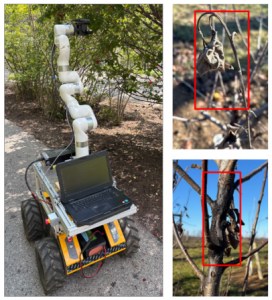
Active Robotic Perception for Disease Detection and Mapping in Apple Trees
Authors: Hayden Feddock, Francisco Yandun, Srđan Aćimović, Abhisesh Silwal
Organizations: Robotics Institute at Carnegie Mellon University, Department of Plant Pathology at Virginia Polytechnic Institute and State University
Platform Featured: Husky
Abstract: Large-scale orchard production requires timely and precise disease monitoring, yet routine manual scouting is labor-intensive and financially impractical at the scale of modern operations. As a result, disease outbreaks are often detected late and tracked at coarse spatial resolutions, typically at the orchard-block level. We present an autonomous mobile active perception system for targeted disease detection and mapping in dormant apple trees, demonstrated on one of the most devastating diseases affecting apple today — fire blight. The system integrates flash-illuminated stereo RGB sensing, real-time depth estimation, instance-level segmentation, and confidence-aware semantic 3D mapping to achieve precise localization of disease symptoms. Semantic predictions are fused into the volumetric occupancy map representation enabling the tracking of both occupancy and per-voxel semantic confidence, building actionable spatial maps for growers. To actively refine observations within complex canopies, we evaluate three viewpoint planning strategies within a unified perception-action loop: a deterministic geometric baseline, a volumetric next-best-view planner that maximizes unknown-space reduction, and a semantic next-best-view planner that prioritizes low-confidence symptomatic regions. Experiments on a fabricated lab tree and five simulated symptomatic trees demonstrate reliable symptom localization and mapping as a precursor to a field evaluation. In simulation, the semantic planner achieves the highest F1 score (0.6106) after 30 viewpoints, while the volumetric planner achieves the highest ROI coverage (85.82\%). In the lab setting, the semantic planner attains the highest final F1 (0.9058), with both next-best-view planners substantially improving coverage over the baseline.
Read more: https://arxiv.org/abs/2603.23112
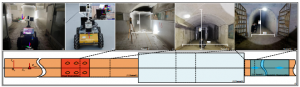
FIRE-LIVWO: Robust LiDAR-Inertial-Visual-Wheel Odometry via Failure-Immune mmWave Radar Enhancement
Authors: Kun Hu, Menggang Li, Kaidi Wu, Zhiwen Jin, Yingjie Zhao, Chaoquan Tang, Eryi Hu, Gongbo Zhou
Organizations: China University of Mining and Technology
Platform Featured: Husky
Abstract: Achieving robust SLAM in large-scale underground coal mines with complex structures and severe degeneracies remains highly challenging. Dense smoke and dust cause substantial loss of visual information and degrade LiDAR point-cloud features, while long, self-similar corridors induce geometric degeneration, leading to pronounced odometry drift. To address these issues, we propose FIRE-LIVWO: Failure-Immune mmWave Radar-Enhanced LiDAR-Inertial-Visual-Wheel Odometry, a tightly coupled multi-modal odometry framework based on an iterated error-state Kalman filter (IESKF). The framework fuses 4D mmWave radar, LiDAR, and visual features within a unified VoxelMap and jointly constructs LiDAR-radar point-to-plane residuals and sparse visual photometric residuals. In smoke-filled environments, we exploit the strong penetration of 4D mmWave radar and introduce pointwise Doppler velocity constraints to preserve state observability. In geometrically degenerate corridors, we tightly couple wheel odometry using non-holonomic constraints (NHC) and online lever-arm compensation to reduce drift. Our central contribution is a degeneration detection and adaptive fusion model switching strategy grounded in geometric and visual observability analysis, which quantifies observability online and dynamically adjusts modality weights. Real-world experiments in underground coal mines demonstrate that FIRE-LIVWO accurately identifies failure boundaries, enabling reliable modality switching under extreme conditions. Compared with baselines, it achieves superior accuracy and robustness (average localization error of 5.677m). We open source our code on Github to benefit the robotics community.
Read more: https://arxiv.org/abs/2609.05325
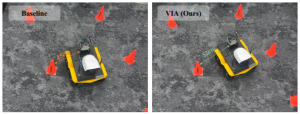
Safety-Constrained Reinforcement Learning with Post-Training Reachability Verification for Robot Navigation
Authors: Qisong He, Xinmiao Huang, Jinwei Hu, Zhuoyun Li, Yi Dong, Changshun Wu, Xiaowei Huang
Organizations: University of Liverpool
Platform Featured: Jackal
Abstract: Safe navigation for mobile robots demands policies that remain reliable under the high-consequence perception uncertainty of cluttered environments. Yet most existing safe reinforcement learning (RL) methods assess safety through average cumulative cost. Such metrics can mask dangerous tail-risk behaviors. To address this, we propose a framework that trains risk-sensitive policies through Conditional Value-at-Risk (CVaR) constrained optimization on an off-policy TD3 backbone and evaluates their safety margins post-training through neural network reachability verification. During training, the policy is optimized under CVaR constraints on cumulative costs, promoting sensitivity to high-cost tail outcomes rather than average behavior alone. After training, we compute action reachable sets under bounded observation uncertainty using Taylor Model analysis, yielding a safety rate metric that quantifies the proportion of evaluated states at which the policy’s reachable action set remains within prescribed safety margins. A key finding is that policies trained with CVaR constraints maintain larger safety margins from obstacles across evaluated states. This makes them significantly more amenable to formal reachability verification. Experiments across ten navigation scenarios and six baselines show that our method achieves a 98.3\% success rate, the highest safety verification rate among all compared methods, while revealing that average cost rankings and reachability-based safety rankings can diverge. This indicates that reachability verification captures risks which are missed by empirical cost metrics alone. We further validate our approach on a physical Clearpath Jackal robot, demonstrating successful sim-to-real transfer.
Read more: https://arxiv.org/abs/2605.14174
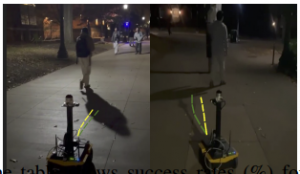
Stereo4DWalker: Learning 4D-aware Embodied Urban Navigation from Internet Stereo Videos
Authors: Wentao Zhou, Xuweiyi Chen, Vignesh Rajagopal, Jeffrey Chen, Rohan Chandra, Zezhou Cheng
Organizations: University of Virginia
Platform Featured: Jackal
Abstract: Despite rapid progress, embodied navigation in dynamic and unstructured urban environments remains brittle. Most existing approaches directly map monocular visual inputs to actions through end-to-end pixel-to-action training, assuming that accurate spatiotemporal (4D) scene understanding will emerge implicitly. While appealing, this paradigm requires large amounts of pixel-to-action supervision that are difficult to obtain. This challenge is amplified in dynamic, unstructured settings, where robust navigation requires precise 4D scene modeling. To address these limitations, we present Stereo4DWalker, a 4D-aware embodied navigation model that leverages stereo inputs and explicitly builds structured 4D representations of geometry and motion. These 4D structures are integrated into the navigation transformer through simple yet effective 4D-conditioned attention layers. To support scalable training, we curate a large-scale stereo navigation dataset with automatically annotated actions from Internet stereo videos. Our experiments show that Stereo4DWalker surpasses state-of-the-art performance using only 1.5% of the training data, highlighting the effectiveness of explicit 4D visual modeling for data-efficient and robust urban navigation.
Read more: https://arxiv.org/abs/2512.10956
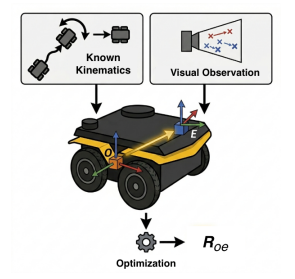
PLS-Calib: A Partial Least Squares Framework for Event Camera and Odometry Calibration under Ground Motion Constraints
Authors: Guangyu Li, Xiao Li, Yujie Wu, Changshuo Wang, Prayag Tiwari, Jiang Cai, Fangwen Yu, Mingkun Xu
Organizations: Guangdong Institute of Intelligence Science and Technology, Institute of Deep-Sea Science and Engineering, Hong Kong Polytechnic University, University College London, Halmstad University, Tsinghua University.
Platform Featured: Jackal
Abstract: Accurate extrinsic rotation calibration between sensors is fundamental to the performance of robotic perception systems. However, most existing calibration techniques rely on full 6-DoF motion to excite all degrees of freedom, which is often infeasible for ground-constrained robots with limited motion capabilities. Recent approaches designed for such restricted settings, such as Canonical Correlation Analysis (CCA)-based methods, suffer from ill-conditioned covariance matrices that lead to numerical instability and suboptimal calibration accuracy. To overcome these limitations, we present a novel rotation calibration framework named PLS-Calib that, for the first time, leverages Partial Least Squares (PLS) regression to model the latent kinematic correlations between asynchronous, heterogeneous sensor streams. Specifically, we apply our method to the calibration of an event camera and an odometry onboard a ground robot. To improve event-based pattern detection, we introduce a polarity-aware event representation, which enhances spatiotemporal contrast in circular calibration targets. Our PLS-based formulation yields a closed-form, stable solution that avoids matrix singularities inherent in CCA-based approaches. Extensive experiments on both synthetic and real-world datasets validate the effectiveness of our approach, demonstrating significant improvements in calibration robustness and accuracy over state-of-the-art methods. This work offers a practical and theoretically grounded solution for rotation calibration in constrained robotic systems and opens up new directions for applying statistical learning techniques in neuromorphic vision.
Read more: https://arxiv.org/abs/2608.03296
The post IROS Research Round-Up: Husky and Jackal in Action appeared first on Clearpath Robotics.